
Smart Fencing Solutions for Modern Tennis Courts
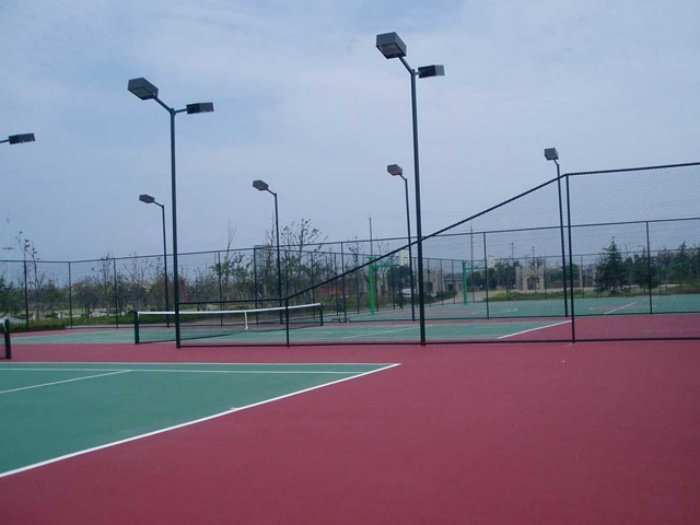
When it comes to building or upgrading a tennis facility, the fence isn’t just a boundary—it’s a key part of the playing experience. A well-designed enclosure ensures safety, contains stray balls, reduces distractions, and even enhances the overall look of the court. But before choosing materials or installation methods, it helps to understand the space you’re working with.
Court Layout & Required Clearances
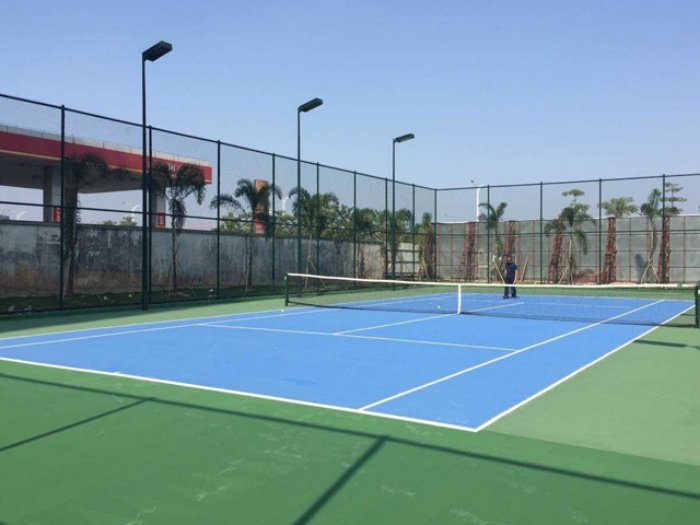
A regulation tennis court needs more room than just the painted lines suggest. While the actual doubles playing area measures 23.77 m long by 10.98 m wide, international standards recommend additional clearance around all sides:
- At least 6.4 meters behind each baseline (for player movement and backswing space)
- Minimum 3.66 meters beyond each sideline
This brings the total recommended footprint to approximately 36.6 m × 18.3 m, or 670 m²—the standard size used when planning fencing or indoor court walls. The net posts themselves are set 12.8 meters apart, and their height at the top is 914 mm above the playing surface.
Why Our Fence System Works for Tennis
We’ve developed our tennis court fencing with real-world use in mind—balancing visibility, strength, and low maintenance. Here’s what sets it apart:
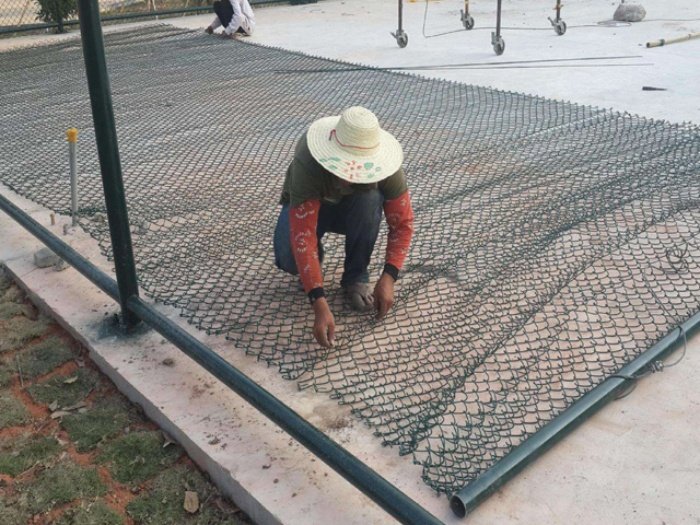
- Material: We start with high-quality low-carbon steel wire—strong enough to withstand impacts but flexible enough to avoid brittleness in cold weather.
- Build Technique: Panels are welded for structural integrity, then finished with a tight woven mesh that prevents tennis balls from getting stuck or bouncing unpredictably.
- Weather Protection:
- The mesh is coated in PVC or PE, which resists fading, chipping, and corrosion.
- Posts and frame components get a powder-coated base layer, followed by a dip-coating process—a double defense against rust, especially in humid or coastal climates.
Key Specs at a Glance:
- Coated wire diameter: 3.8 mm
- Mesh openings: 45×45 mm or 50×50 mm (both tested for optimal ball retention)
- Panel dimensions: 3 m wide × 4 m tall (standard modular size for easy transport and assembly)
- Main posts: 60 mm OD round tube, 2.5 mm wall thickness
- Horizontal supports: 48 mm OD round tube, 2.0 mm wall thickness
Color Choices:
Dark green remains the go-to option—it’s subtle, non-reflective, and blends seamlessly into most landscapes. Grass green is available for facilities wanting a slightly fresher tone.
Dark green remains the go-to option—it’s subtle, non-reflective, and blends seamlessly into most landscapes. Grass green is available for facilities wanting a slightly fresher tone.
Installation Made Simple
We offer two proven mounting options, depending on your site:
- Embedded Post Method
Ideal for new builds or open ground. Technicians dig post holes, position the uprights, and secure them with poured concrete. After curing (usually 1–2 days), panels are attached. This method delivers maximum stability and is preferred for permanent installations. - Surface-Mount Base Plate
Perfect for existing hard surfaces like concrete or asphalt. Heavy-duty base plates are bolted directly to the ground using expansion anchors—no excavation needed. It’s faster, cleaner, and great for retrofits or temporary setups.
Whether you’re outfitting a private club, school campus, or public park, this fencing system offers durability without constant upkeep, clean sightlines for players and spectators, and a polished finish that lasts season after season. And because it’s designed specifically for tennis—not repurposed from industrial or agricultural fencing—it performs exactly as needed where the game happens.